
What CERCLA means
CERCLA is the Comprehensive Environmental Response, Compensation, and Liability Act. Congress enacted it in 1980, and people usually call it Superfund. This page reflects the statute as amended through EPA’s 2024 PFAS final rule, published at 89 Fed. Reg. 39124 on May 8, 2024 and effective July 8, 2024, which designated PFOA and PFOS as CERCLA hazardous substances.
- 1980
- enacted as Public Law 96-510
- 42 U.S.C. Chapter 103
- codified at 42 U.S.C. §§ 9601-9675
- EPA
- implements most of the Superfund program
- Section 107(a)
- main liability provision
- NPL
- National Priorities List for priority remedial sites
- 2024 PFAS rule
- PFOA and PFOS designated as hazardous substances
CERCLA at a glance: the statute grid
This is the standard statute grid used on Field & Statute for federal environmental laws. Each row gives the property, the current value, and the primary source. The latest change reflected here is EPA’s 2024 final rule designating PFOA and PFOS, including their salts and structural isomers, as hazardous substances under CERCLA.
| Property | Value | Primary source |
|---|---|---|
| Full name | Comprehensive Environmental Response, Compensation, and Liability Act | Public Law 96-510, Dec. 11, 1980; 42 U.S.C. §§ 9601-9675 |
| Common name | Superfund | CERCLA, 42 U.S.C. § 9601 et seq.; EPA Superfund program materials |
| Acronym | CERCLA | 42 U.S.C. Chapter 103; 40 CFR Part 302 |
| Enacted | 1980 | Public Law 96-510, Dec. 11, 1980, 94 Stat. 2767 |
| Major amendment | Superfund Amendments and Reauthorization Act of 1986, usually called SARA | Public Law 99-499, Oct. 17, 1986 |
| U.S. Code title and sections | Title 42, Chapter 103, §§ 9601-9675 | 42 U.S.C. Chapter 103 |
| Federal implementation | EPA implements much of the Superfund program; the National Contingency Plan also assigns lead-agency roles to other federal agencies in defined settings | 42 U.S.C. §§ 9604, 9606, 9607; 40 CFR Part 300 |
| What it regulates | Releases and threatened releases of hazardous substances, pollutants, and contaminants, plus response actions and liability for cleanup costs | 42 U.S.C. §§ 9601, 9604, 9606, 9607 |
| Permits it creates | None as a general permitting program | CERCLA structure in 42 U.S.C. §§ 9601-9675 |
| Main cleanup list | National Priorities List, the NPL, in Appendix B to the National Oil and Hazardous Substances Pollution Contingency Plan | 40 CFR Part 300, Appendix B |
| Citizen-suit provision | Any person may sue under the limits and notice rules in CERCLA section 310 | 42 U.S.C. § 9659 |
| Main implementing regulations | National Contingency Plan at 40 CFR Part 300; hazardous-substance designation, reportable quantities and notification at 40 CFR Part 302 | eCFR Title 40, Parts 300 and 302 |
| Latest amendment or rule change reflected | EPA final rule designating PFOA and PFOS, including salts and structural isomers, as CERCLA hazardous substances | 89 Fed. Reg. 39124, May 8, 2024, effective July 8, 2024 |
| Key court decisions | Bestfoods, Cooper Industries, Atlantic Research, Burlington Northern | United States v. Bestfoods, 524 U.S. 51 (1998); Cooper Industries, Inc. v. Aviall Services, Inc., 543 U.S. 157 (2004); United States v. Atlantic Research Corp., 551 U.S. 128 (2007); Burlington Northern & Santa Fe Railway Co. v. United States, 556 U.S. 599 (2009) |
Two rows matter more than the rest. CERCLA is a liability and cleanup statute, not an ordinary permit program. And the hazardous-substance list changed in 2024 for PFOA and PFOS. That does not turn every PFAS issue into a CERCLA case, but it does bring those two chemicals into the statute’s release, reporting, response, and cost-recovery framework when the legal thresholds are met.
What CERCLA does, and what Superfund means
CERCLA is about response. Under 42 U.S.C. § 9604(a)(1), the President may respond when a hazardous substance is released or substantially threatens release. The statute separately authorizes response to a release or substantial threat of release of a pollutant or contaminant that may present an imminent and substantial danger to public health or welfare. Those response authorities are implemented through federal delegations and the National Contingency Plan, the official roadmap for the program.
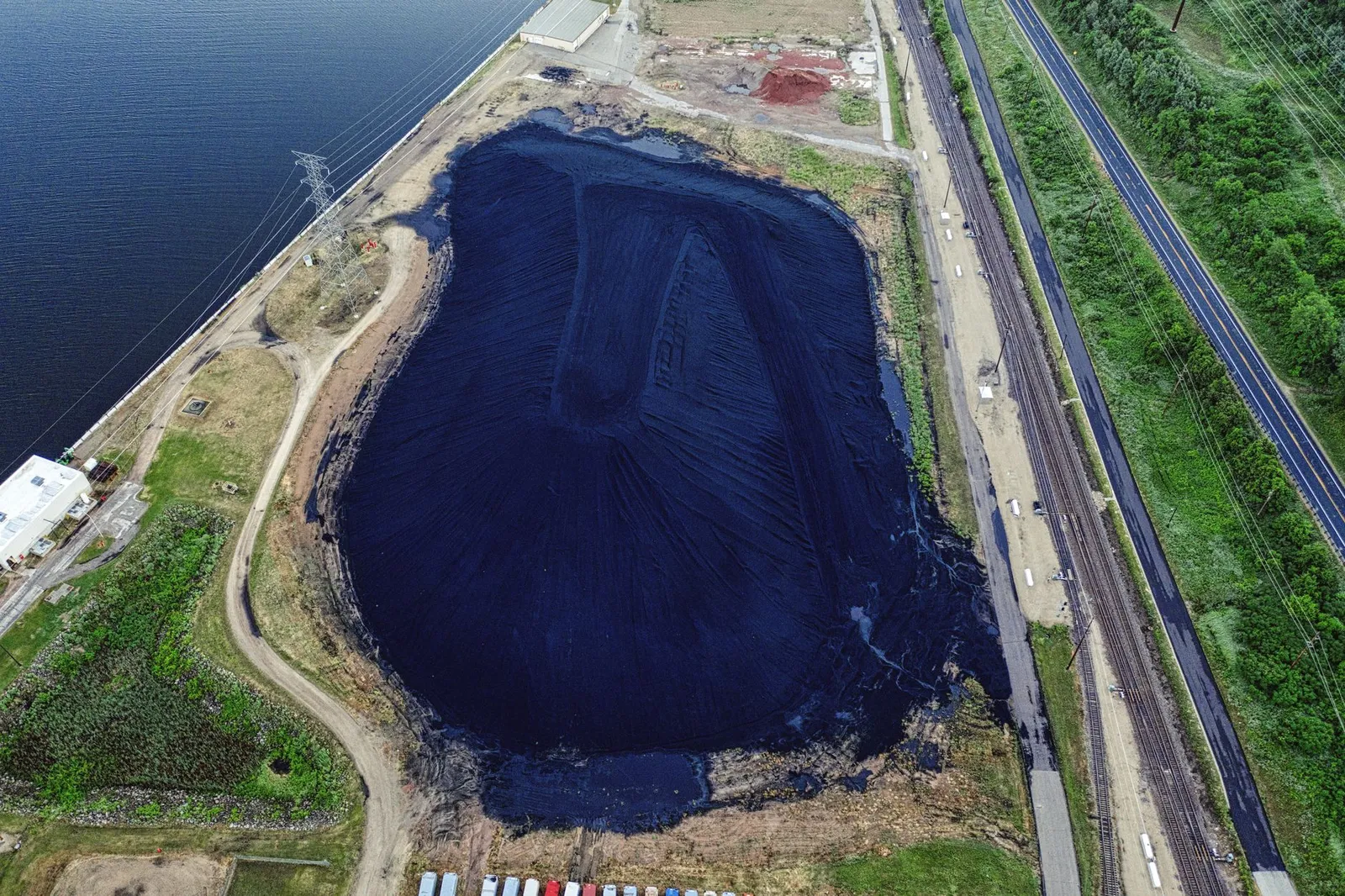
The statute defines “release” broadly in 42 U.S.C. § 9601(22): spilling, leaking, pumping, emitting, discharging, escaping, leaching, dumping, and disposing all fit the definition.
“Superfund” is the common name for the cleanup program built around CERCLA. That name is useful, but it can blur the statute’s structure. CERCLA is not only a federal fund. It also gives the federal government tools to order work, settle with responsible parties, perform response work itself, and recover costs after the fact. In practice, the agency may ask for an information request, review records, or issue an official letter before moving to a formal enforcement step.
The statute is aimed at contamination and cleanup, not ordinary waste handling on its own. If the issue is how waste is being generated, stored, treated, or disposed of now, RCRA may be the better fit. CERCLA comes into focus when the question is release, cleanup, and who pays.
Who pays under CERCLA: the four PRP classes
Section 107(a), 42 U.S.C. § 9607(a), identifies four classes of potentially responsible parties, usually called PRPs. “Potentially” is not a throwaway word. It marks the group that may be liable under the statute, but actual liability still depends on defenses, causation, apportionment, settlements, and the facts at the site.
| PRP class under 42 U.S.C. § 9607(a) | What the statute covers | Plain-English meaning |
|---|---|---|
| Current owner or operator | The owner and operator of a vessel or facility | A current owner or operator may fall within CERCLA liability even if the disposal happened earlier |
| Past owner or operator at the time of disposal | A person who owned or operated the facility when hazardous substances were disposed of | A former owner or operator may be liable if the disposal took place during that period |
| Arranger | A person who arranged for disposal or treatment, or arranged with a transporter for disposal or treatment, of hazardous substances | Sending hazardous substances elsewhere can still fit CERCLA if the arrangement meets the statute |
| Transporter who selected the site | A person who accepted hazardous substances for transport to disposal or treatment facilities, incineration vessels, or sites selected by that person | A transporter may be liable when it chose the destination |
CERCLA liability is often called strict liability. That means the government does not have to prove negligence in the ordinary sense, although statutory defenses still matter. Section 107(b), 42 U.S.C. § 9607(b), lists defenses for releases caused solely by an act of God, an act of war, or certain acts or omissions of a third party, if the statutory conditions are met. The word “solely” does real work there.
Courts also treat CERCLA as a statute that can lead to joint and several liability when the harm is not divisible. That does not mean every defendant pays everything automatically. Burlington Northern, decided in 2009, confirmed that apportionment can be available when the record provides a reasonable basis to divide the harm.
Cost recovery and contribution are related, but they are not the same remedy. Section 107(a), 42 U.S.C. § 9607(a), supports cost-recovery claims for response costs. Section 113(f), 42 U.S.C. § 9613(f), governs contribution in specified settings. Cooper Industries held in 2004 that section 113(f)(1) contribution requires a civil action under section 106 or 107(a). Atlantic Research held in 2007 that a private party that incurred its own cleanup costs may sue under section 107(a) to recover those costs from other PRPs.
In the liability frame
- A current owner or operator of a facility
- A past owner or operator when disposal occurred
- A person who arranged for disposal or treatment
- A transporter who selected the disposal or treatment site
Not enough by itself
- A nearby property owner without a statutory connection
- A person named in conversation but not tied to section 107(a)
- A generator of ordinary trash without a hazardous-substance link
- A transporter that did not select the site, unless another liability theory applies
The short version is blunt: CERCLA asks who fits section 107(a), what response costs were incurred, and whether any defense, settlement rule, or apportionment theory changes the result.
How cleanup works: removal, remedial action and the NPL
CERCLA uses “response” as the umbrella term. Section 101, 42 U.S.C. § 9601, defines response to include removal and remedial action. That split helps make sense of the cleanup path.
A removal action is the faster response. It can address urgent conditions, stabilize a release, reduce exposure, or take other short-term steps allowed under the statute and the National Contingency Plan. Removal is not limited to sites on the National Priorities List, and it can be used in an emergency.
A remedial action is the longer path. It usually involves more study, remedy selection, and implementation. At major sites, EPA often uses a remedial investigation and feasibility study, or RI/FS. The remedial investigation describes the nature and extent of contamination. The feasibility study compares cleanup options. EPA then selects a remedy through the CERCLA process and the National Contingency Plan at 40 CFR Part 300.
A simple sequence looks like this:
- A release or threatened release is identified.
- EPA or another authorized agency assesses the site.
- The response path may be removal, remedial action, or both.
- If the site warrants national priority status, EPA may list it on the National Priorities List.
- Cleanup, enforcement, settlement, cost recovery, and long-term controls may follow.
The National Priorities List, or NPL, is not a list of every contaminated site in the country. It is the list in Appendix B to 40 CFR Part 300 of releases that appear to warrant further remedial action under the National Contingency Plan. A site can have CERCLA activity without being on the NPL. Listing also does not settle every liability question by itself. Liability still turns on the statute, the facts, and the parties.
EPA’s enforcement tools include administrative orders, settlements, consent decrees, and cost-recovery actions. The Department of Justice may represent the United States in federal litigation. When responsible parties cannot be found, cannot pay, or do not act, the federal government may perform or fund response work under CERCLA authority, then seek recovery where the statute allows. That enforcement and compliance path is one reason the statute is read alongside agency practice, not as a static text.
The 2024 PFAS update: PFOA and PFOS became CERCLA hazardous substances
EPA’s 2024 PFAS final rule added two PFAS compounds to CERCLA’s hazardous-substance list: PFOA and PFOS, including their salts and structural isomers. EPA published the rule at 89 Fed. Reg. 39124 on May 8, 2024. It became effective July 8, 2024.
This page reflects that change because CERCLA’s cleanup and liability system depends in part on what counts as a hazardous substance. Section 101(14), 42 U.S.C. § 9601(14), defines the term by cross-reference and designation. EPA used CERCLA section 102(a), 42 U.S.C. § 9602(a), to designate PFOA and PFOS.
What changes is the legal status under CERCLA. A release of PFOA or PFOS may trigger reporting duties when a reportable quantity is met. EPA response authority can apply when the statutory conditions are present. Cost recovery and enforcement questions can also arise.
The rule does not mean that every detection of PFOA or PFOS produces the same CERCLA outcome. The statute still requires a release, a threshold, a response question, and a liability analysis. That is true whether the issue appears in a company letter, a cleanup review, or a public information request.
We are not using the 2024 rule as a general PFAS health explainer. The point here is narrower and date-specific: PFOA and PFOS are now CERCLA hazardous substances, and that changes the release-response framework for those compounds.
What CERCLA is not: no ordinary permit program
CERCLA is primarily a cleanup, response, and liability statute. It does not work like the Clean Water Act’s NPDES permit program, and it does not operate like RCRA’s hazardous-waste treatment, storage, and disposal permit system.
That boundary clears up two common mistakes. First, “CERCLA regulations” does not mean CERCLA creates a routine operating permit. The main regulations are response and cleanup rules, especially the National Contingency Plan at 40 CFR Part 300, plus hazardous-substance designation, reportable-quantity and notification rules at 40 CFR Part 302.
Second, “CERCLA compliance” usually means compliance with cleanup orders, settlement terms, reporting duties, or response obligations, not holding a general CERCLA permit.
RCRA and CERCLA can both matter at the same facility, but they ask different first questions. RCRA asks how waste is managed now. CERCLA asks what release occurred, what response is needed, and who can be made to pay.
Federal, state, tribal and federal-facility roles
EPA implements much of the Superfund program, but CERCLA does not sit on a single desk. The President’s response authorities are delegated through the federal government, and the National Contingency Plan assigns lead-agency roles for different kinds of releases and facilities.
The Department of Justice may handle federal court litigation for the United States when enforcement, cost recovery, or settlement approval requires it.
States also have roles. Some come from CERCLA itself, some from cooperative agreements, and some from state cleanup laws that run alongside the federal program. Tribal governments can have roles where releases affect tribal lands, resources, consultation interests, or other legally recognized concerns.
Federal facilities are not outside CERCLA. EPA treats them as a major category because military bases, energy facilities, and other federal properties can have contamination subject to CERCLA response and cleanup requirements. The federal government can be a regulator, a land manager, and in some settings a responsible party.
The vocabulary stays the same: release, facility, hazardous substance, response action, liability.
Key cases that shape CERCLA liability
These Supreme Court cases anchor the liability rules discussed above. Each one sits close to a statutory section.
| Case | Date | CERCLA point |
|---|---|---|
| United States v. Bestfoods, 524 U.S. 51 | 1998 | A parent corporation is not liable merely because it owns a subsidiary, but it may be liable as an operator if it manages, directs, or conducts operations specifically related to pollution at the facility |
| Cooper Industries, Inc. v. Aviall Services, Inc., 543 U.S. 157 | 2004 | Contribution under section 113(f)(1) requires a civil action under section 106 or section 107(a) |
| United States v. Atlantic Research Corp., 551 U.S. 128 | 2007 | A private party that incurs response costs may pursue cost recovery under section 107(a) against other PRPs |
| Burlington Northern & Santa Fe Railway Co. v. United States, 556 U.S. 599 | 2009 | Arranger liability requires more than mere sale of a useful product, and apportionment may be available when there is a reasonable basis to divide harm |
Bestfoods is the corporate-structure case. Cooper Industries and Atlantic Research draw the line between contribution and cost recovery. Burlington Northern matters for two recurring questions: when a party arranged for disposal, and when a court may divide responsibility instead of imposing joint and several liability for the whole harm.
Compared with neighboring environmental laws
CERCLA sits next to statutes that regulate different points in the pollution cycle.
| Law or program | Main question | How it differs from CERCLA |
|---|---|---|
| CERCLA, Superfund | What release occurred, what cleanup is needed, and who pays? | Response, cleanup, liability, NPL, cost recovery |
| RCRA | How is solid or hazardous waste generated, stored, treated, transported, or disposed of now? | Ongoing waste management and permitting, rather than a contaminated-site cost-recovery scheme |
| Clean Water Act | Is there a regulated discharge to covered waters, and is a permit required? | Water discharge controls and permits, rather than Superfund cleanup liability |
| Natural resource damages under CERCLA | What injury occurred to natural resources, and what restoration or compensation is owed? | Related to CERCLA, but focused on trustees and injured resources |
This is not a ranking. It is a way to avoid using CERCLA as a catchall label for every environmental problem. The statute has a specific job: response to releases and threatened releases, plus liability for cleanup and related costs.
Common questions about CERCLA
Common CERCLA questions
What does CERCLA stand for?
CERCLA stands for the Comprehensive Environmental Response, Compensation, and Liability Act. Congress enacted it in 1980, and it is codified at 42 U.S.C. §§ 9601-9675.
Is CERCLA still enforced?
Yes. EPA still implements much of the Superfund program through response actions, settlements, orders, cost recovery, federal-facility work, and the National Priorities List. EPA’s 2024 PFAS final rule is a recent example of current CERCLA activity.
Who can be liable under CERCLA?
Under 42 U.S.C. § 9607(a), the four PRP classes are current owners and operators, past owners and operators at the time of disposal, arrangers for disposal or treatment, and transporters who selected the disposal or treatment site.
What is CERCLA also known as?
CERCLA is commonly known as Superfund. EPA uses that name for the cleanup program associated with abandoned, uncontrolled, or otherwise contaminated sites and releases.
Does CERCLA create permits?
Not as a general permitting program. CERCLA creates response authority, reporting duties in defined settings, cleanup obligations, enforcement tools, and liability rules. Other statutes, such as RCRA or the Clean Water Act, create the main permit programs.
What changed for PFAS in 2024?
EPA designated PFOA and PFOS, including their salts and structural isomers, as CERCLA hazardous substances. The final rule was published at 89 Fed. Reg. 39124 on May 8, 2024, and became effective July 8, 2024.
Collection path
Federal Environmental Laws > Federal Environmental Laws > CERCLA. Neighboring topics for the next reading step are RCRA, for current hazardous-waste management, and What Is a Superfund Site?, for how a contaminated site moves through assessment, NPL listing, remedy selection, cleanup, and cost recovery.
Primary sources
- Designation of Perfluorooctanoic Acid (PFOA) and Perfluorooctanesulfonic Acid (PFOS) as CERCLA Hazardous Substances, 89 Fed. Reg. 39124, Federal Register / Environmental Protection Agency.
- 40 CFR Part 300: National Oil and Hazardous Substances Pollution Contingency Plan, Electronic Code of Federal Regulations.
- Appendix B to Part 300: National Priorities List, Electronic Code of Federal Regulations.
- 40 CFR Part 302: Designation, Reportable Quantities, and Notification, Electronic Code of Federal Regulations.
- Supreme Court opinions: Bestfoods, Cooper Industries, Atlantic Research and Burlington Northern, Legal Information Institute, Cornell Law School.
Sources accessed October 24, 2026.