
En bref
The Clean Air Act is the federal air pollution statute that turns national standards into enforceable state plans, permits, and source limits. It is codified mainly at 42 U.S.C. §§ 7401-7671q, with EPA as the lead federal agency and states running many day-to-day programs. Its four working programs are NAAQS, SIPs, NSR, and Title V. The last major statutory overhaul was the 1990 Amendments. The main update-sensitive issue on this page is the 2025-2026 greenhouse-gas endangerment rescission and litigation. Citizen suits exist under 42 U.S.C. § 7604, but only within the statute’s notice and other limits.
- 42 U.S.C. §§ 7401-7671q
- main statutory location
- EPA
- lead federal agency, with states carrying out many programs
- 1970 and 1990
- modern structure and last major statutory revision
- NAAQS, SIPs, NSR, Title V
- four working programs explained below
- 42 U.S.C. § 7604
- citizen-suit provision
- 2026
- rule status checked at publication
Breadcrumb: Federal Environmental Laws > Clean Air Act
The Clean Air Act is not a single ban on air pollution. It works through standards, state plans, permits, emission limits, technology requirements, and enforcement.
The legal path is usually layered. EPA sets a national standard or a federal rule, a state implementation plan translates it into enforceable measures for an area, a permit gathers obligations for a source, and EPA, a state, or a qualifying citizen suit can enforce the limits.
That structure matters. Readers often try to read the Act as if every provision works the same way. It does not. Ambient air standards, source-specific permits, interstate transport rules, and hazardous-air-pollutant controls sit in different parts of the statute, and each one has its own trigger.
The Clean Air Act at a glance
The table below follows the common statute grid used on this site for federal environmental laws. Each entry gives the value and the first primary source to check. Where a current rulemaking matters, the value is dated because Clean Air Act law changes through Federal Register notices, not through summaries.
| Property | Value | Primary source |
|---|---|---|
| Enacted | Federal air pollution legislation began with the Air Pollution Control Act of 1955. The modern Clean Air Act structure was enacted in 1970, with major amendments in 1977 and 1990. | U.S. Code chapter heading and public law history in 42 U.S.C. ch. 85 |
| U.S. Code title and sections | Title 42, Chapter 85, mainly 42 U.S.C. §§ 7401-7671q. | U.S. Code, Title 42, Chapter 85 |
| Lead agency | EPA is the lead federal agency. States and local air agencies implement many approved programs, especially under State Implementation Plans and permit programs. | 42 U.S.C. §§ 7407, 7410, 7661a |
| What it regulates | Air pollutants emitted by stationary sources and mobile sources, ambient air quality, hazardous air pollutants, interstate transport, acid deposition, fuels and vehicles, and stratospheric ozone-depleting substances. | 42 U.S.C. §§ 7408-7412, 7470-7515, 7521, 7651-7651o, 7671-7671q |
| Main pollutants and programs | Criteria pollutants under the National Ambient Air Quality Standards program, hazardous air pollutants under § 7412, mobile-source pollutants under § 7521, and greenhouse gases where a Clean Air Act program lawfully reaches them. | 42 U.S.C. §§ 7408, 7409, 7412, 7521; 40 C.F.R. part 50 |
| Permits it creates | New Source Review preconstruction permits, including Prevention of Significant Deterioration permits and nonattainment NSR permits; Title V operating permits for major sources and other covered sources; acid rain permits in Title IV-A. | 42 U.S.C. §§ 7475, 7503, 7651g, 7661-7661f; 40 C.F.R. part 70 |
| Citizen-suit provision | 42 U.S.C. § 7604 authorizes certain civil actions after statutory conditions are met, including notice requirements. | 42 U.S.C. § 7604 |
| Latest major statutory amendment | The Clean Air Act Amendments of 1990, Public Law 101-549, signed November 15, 1990, are the last major statutory revision. | Public Law 101-549, 104 Stat. 2399 |
| Latest rule or rulemaking status checked | Sources checked October 24, 2026. EPA published a 2025 proposed rule to reconsider the 2009 greenhouse-gas endangerment finding and vehicle greenhouse-gas standards, then published a final rule at 91 Fed. Reg. 7686 on February 18, 2026. That final rule rescinded the 2009 endangerment and cause-or-contribute findings for new motor vehicles and engines and repealed vehicle greenhouse-gas emission standards identified in the rule, with an effective date of April 20, 2026. Petitions for review were filed in the D.C. Circuit. | 90 Fed. Reg. 36288, Aug. 1, 2025; 91 Fed. Reg. 7686, Feb. 18, 2026 |
| Key court decisions | Massachusetts v. EPA, 2007; EPA v. EME Homer City Generation, 2014; Utility Air Regulatory Group v. EPA, 2014; Michigan v. EPA, 2015; West Virginia v. EPA, 2022. | Supreme Court opinions cited below |
The Clean Air Act sits in a different place from the Clean Water Act. Air law usually starts with ambient standards, area status, and source controls.
Water law usually starts with discharges to covered waters and permits for those discharges. That difference sounds abstract until you see a facility that has one Clean Air Act problem, one water problem, and a completely different agency file for each.
The four programs that make the Act work
The Clean Air Act turns air-quality goals into enforceable programs. The four parts readers should understand first are National Ambient Air Quality Standards, State Implementation Plans, New Source Review, and Title V operating permits. They do different jobs.
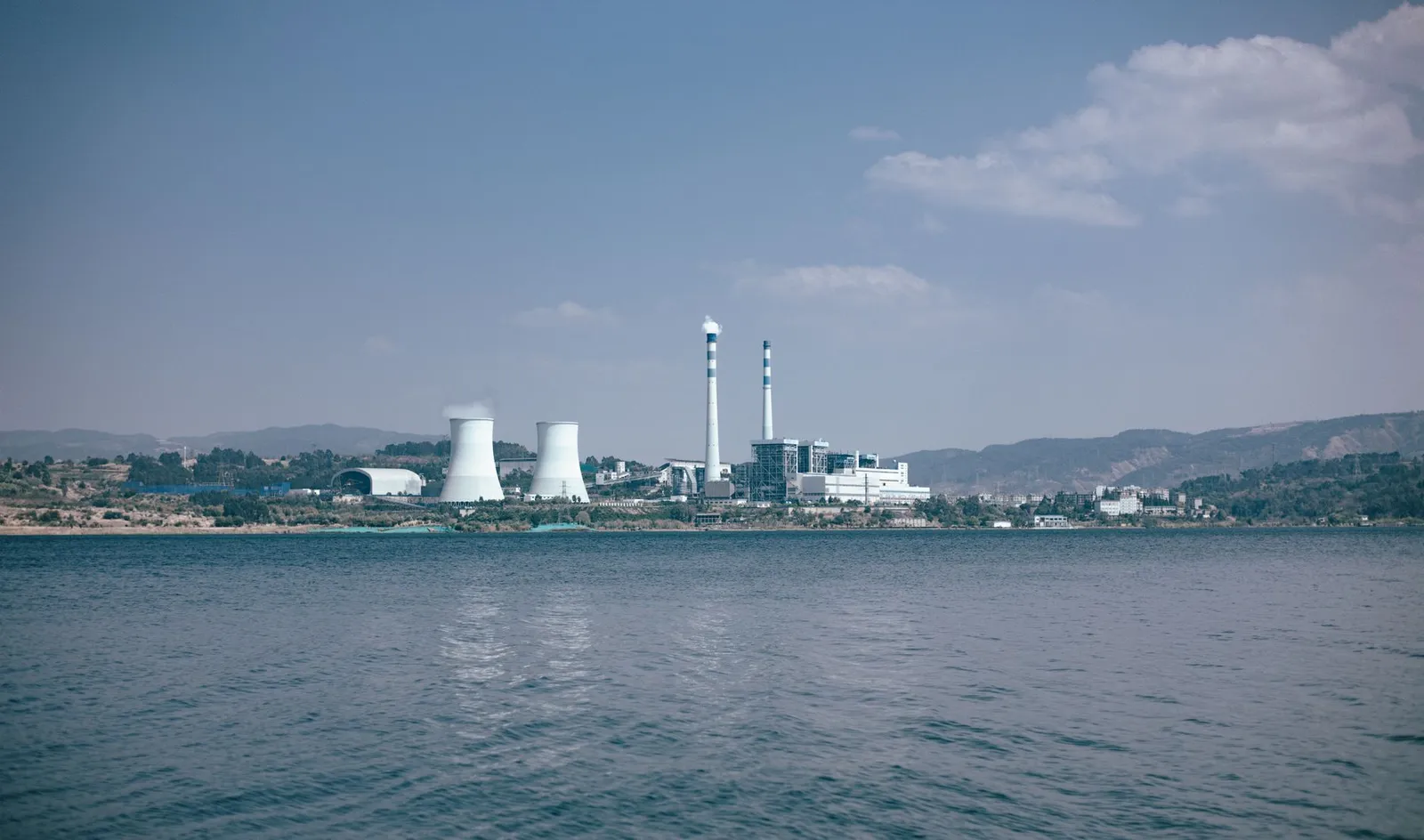
A standard is not a permit. A state plan is not the same thing as a federal rule. A New Source Review permit is not the same thing as a Title V operating permit.
Once those lines blur, a Clean Air Act summary usually becomes unreliable.
The structure is easier to follow if you read it as a chain:
- EPA identifies pollutants and sets national standards or emission requirements under the statute.
- A state prepares a plan to attain or maintain the standards.
- A source may need a preconstruction permit, an operating permit, or both.
- EPA, a state, or a proper citizen suit may enforce the resulting limits.
That sequence is the spine of the statute. Everything else branches from it.
National Ambient Air Quality Standards
National Ambient Air Quality Standards, usually shortened to NAAQS, are national standards for outdoor air quality. Under 42 U.S.C. §§ 7408 and 7409, EPA identifies air pollutants that meet the statutory criteria and sets standards for them.
The current NAAQS program covers the criteria pollutants listed in 40 C.F.R. part 50: ozone, particulate matter, sulfur dioxide, nitrogen dioxide, carbon monoxide, and lead.
The Act separates primary and secondary standards. Under 42 U.S.C. § 7409(b)(1), primary standards protect public health with an adequate margin of safety. Under § 7409(b)(2), secondary standards protect public welfare.
That term reaches effects on visibility, crops, vegetation, wildlife, and buildings. It also matters for children, because public health standards are not limited to adult exposure. The point is simple: the statute does not treat every air standard as a health-only number.
NAAQS are ambient standards, not individual smokestack permits. They define the air-quality target that states and sources must help meet through the rest of the Act.
That is why a NAAQS alone does not tell you what a particular plant must do. You have to follow the statutory chain one step further.
State Implementation Plans
A State Implementation Plan, usually called a SIP, is the state plan for attaining, maintaining, and enforcing NAAQS. Section 7410 requires each state to submit a plan with enforceable emission limits and other measures. EPA reviews the plan against statutory criteria.
It can approve the plan, disapprove it, approve it in part, or, in some settings, issue a federal implementation plan.
This is the federalism engine of the Clean Air Act. Congress set the framework. EPA sets national standards and reviews plans. States choose many of the control measures that apply within their borders, subject to EPA approval and statutory minimums.
That division of labor is not an accident. It is how the statute was built.
The SIP system matters most when an area is in nonattainment, meaning it does not meet a NAAQS or contributes to a nearby violation.
Nonattainment triggers additional planning, permitting, and control requirements under the Act. It can also overlap with Environmental Justice questions when pollution burdens land in already overburdened communities.
New Source Review
New Source Review, or NSR, is a preconstruction permitting program. It applies before construction or major modification of certain stationary sources. A stationary source is a fixed source of air emissions, such as a power plant, refinery, factory, or large industrial boiler.
There are two main NSR tracks. Prevention of Significant Deterioration, called PSD, applies in areas that meet or are unclassifiable for the relevant NAAQS. Nonattainment NSR applies in areas that do not meet the relevant standard.
PSD appears in 42 U.S.C. §§ 7470-7492, including the permit requirement in § 7475. Nonattainment permit requirements appear in § 7503.
NSR is not an operating permit catalog. It asks whether a new or modified source can be built and what controls must be in place before construction goes forward. That is a different question from whether the source may keep operating.
Title V operating permits
Title V, codified at 42 U.S.C. §§ 7661-7661f, created the operating permit program added by the 1990 Clean Air Act Amendments. The core rule for state operating-permit programs appears in 40 C.F.R. part 70.
A Title V permit collects the Clean Air Act requirements that apply to a covered source, often a major source, into one operating document. It includes monitoring, recordkeeping, reporting, and compliance certification obligations. That makes the source’s legal duties easier to find and enforce.
Title V does not always create new substantive emission limits by itself. Its job is to gather and make enforceable the limits that already apply under the Act, the SIP, NSR permits, hazardous-air-pollutant standards, new source performance standards, or other Clean Air Act rules.
If you want to know what the source must do, Title V is often the place where the answer is assembled. It is not always the place where the answer was born.
What the Act regulates: pollutants, sources, and places
The Clean Air Act reaches air pollution through several categories. The category matters because each part of the statute has its own trigger, decisionmaker, and permit path.
| Subject | How the Act reaches it | Example of program |
|---|---|---|
| Ambient air pollutants | EPA sets national ambient standards, and states prepare plans to attain and maintain them. | NAAQS and SIPs under 42 U.S.C. §§ 7408-7410 |
| Hazardous air pollutants | EPA regulates listed toxic air pollutants through technology-based standards and related provisions. | § 7412 hazardous air pollutant standards |
| Stationary sources | Fixed sources may face performance standards, hazardous-pollutant standards, NSR permits, and Title V operating permits. | NSR, NSPS, NESHAP, Title V |
| Mobile sources | EPA regulates emissions from motor vehicles, engines, fuels, and related categories under mobile-source provisions. | § 7521 motor vehicle emission standards |
| Interstate pollution | EPA and states address pollution that crosses state lines and interferes with downwind air-quality obligations. | Good Neighbor implementation under § 7410(a)(2)(D) |
| Stratospheric ozone | Title VI controls ozone-depleting substances and related practices. | 42 U.S.C. §§ 7671-7671q |
Greenhouse gases need a separate note because they sit at the intersection of statute, agency findings, rules, data, and court limits.
In Massachusetts v. EPA, the Supreme Court held in 2007 that greenhouse gases fit within the Clean Air Act’s broad definition of “air pollutant” for the mobile-source provision at issue, and that EPA had to ground its refusal to regulate in the statute.
EPA then issued the 2009 endangerment and cause-or-contribute findings for greenhouse gases under § 7521(a). In February 2026, EPA published a final rule rescinding those 2009 findings for new motor vehicles and engines and repealing the vehicle greenhouse-gas standards identified in that rule. Petitions for review were filed in the D.C. Circuit, so the litigation status remains part of the current legal picture.
That point is easy to miss if you read only headlines. The law did not flip every Clean Air Act program in one clean line. Different provisions have treated greenhouse gases in different ways, and courts have drawn limits around some uses of the Act.
What changed in 1990
The 1990 Clean Air Act Amendments are the last major statutory redesign. EPA’s overview of the Clean Air Act states that the last major change in the law was the 1990 amendments. The enacted law is Public Law 101-549, signed November 15, 1990.
The amendments did several things that still shape the Act:
- They created the Title IV-A acid rain program, including allowance and permit provisions for sulfur dioxide and nitrogen oxides from covered power plants.
- They rewrote the hazardous air pollutant program in § 7412, moving toward a technology-based system for listed source categories and pollutants.
- They created Title V operating permits, which made source obligations easier to compile, monitor, and enforce.
- They strengthened enforcement provisions, including administrative penalty and compliance tools.
- They added and revised provisions for stratospheric ozone protection in Title VI.
- They revised mobile-source and fuel provisions, including programs for cleaner vehicles and fuels.
A date confusion comes up often enough that it is worth clearing away. The Clean Air Act did not begin only in 1970, and the 1990 Clean Air Act was not a brand-new law from scratch.
Federal air pollution legislation began earlier. The modern regulatory framework came from the 1970 amendments, was revised in 1977, and was substantially expanded in 1990.
For current legal work, the 1990 amendments matter because many permits and compliance duties still trace to them. Title V, hazardous air pollutants, acid rain, ozone-depleting substances, and enforcement tools all look different after 1990.
2025-2026 rule status: what is now under review
This section reflects sources checked on October 24, 2026. It separates statutes, rules, proposals, and court decisions because they do different legal work.
The Clean Air Act itself remains codified in the U.S. Code. A rulemaking can change EPA regulations, rescind a regulation, replace a standard, or reconsider a finding. It does not amend the words Congress enacted in 42 U.S.C. §§ 7401-7671q. Only Congress can amend the statute.
The main 2025-2026 tracking issue for this page is the status of EPA’s greenhouse-gas endangerment framework for motor vehicles. The starting point was EPA’s 2009 Federal Register notice, 74 Fed. Reg. 66496, issued December 15, 2009.
That 2009 notice made endangerment and cause-or-contribute findings for greenhouse gases under Clean Air Act § 202(a), codified at 42 U.S.C. § 7521(a), for new motor vehicles and new motor vehicle engines.
EPA then published a proposed rule at 90 Fed. Reg. 36288 on August 1, 2025, proposing to rescind the 2009 endangerment finding and related vehicle greenhouse-gas standards. EPA published the final rule at 91 Fed. Reg. 7686 on February 18, 2026. The final rule stated an effective date of April 20, 2026.
The final 2026 rule rescinded the 2009 findings of contribution and endangerment and repealed greenhouse-gas emission standards for light-duty, medium-duty, and heavy-duty vehicles and engines identified in the rule. The rule did not amend the text of the Clean Air Act itself.
Petitions for review were filed in the D.C. Circuit. For current legal work, the questions to ask are narrow and legal:
- What Federal Register action is at issue: the 2025 proposal, the 2026 final rule, or a later EPA action?
- What Clean Air Act section did EPA invoke?
- What regulatory text did the final rule change or remove?
- What effective date did the final action give?
- Did a court stay, vacate, remand, or leave the action in place during review?
A proposed rule does not amend the statute. A final rule can change regulations and agency findings within the scope of the agency’s claimed authority, but it is still subject to judicial review.
Court decisions also set boundaries. Massachusetts v. EPA, decided in 2007, explains why greenhouse gases can fall within the Act’s definition of “air pollutant” in the mobile-source context.
Utility Air Regulatory Group v. EPA, decided in 2014, limits how greenhouse gases can trigger PSD and Title V permitting by themselves. West Virginia v. EPA, decided in 2022, limits EPA’s use of § 7411(d) for generation-shifting measures in the power sector under the major questions doctrine.
None of those decisions is a substitute for checking the current Federal Register text and the current court docket.
We treat this as an update-sensitive part of the page. If the D.C. Circuit or the Supreme Court stays, vacates, remands, or upholds the 2026 final rule, the page should be updated with the court, date, docket number, and operative order.
Enforcement and citizen suits
EPA enforces the Clean Air Act, but it is not the only actor. States enforce approved SIPs and permit programs. Local air districts may also play a role where state law and approved plans give them authority.
The statute uses this shared structure because many Clean Air Act duties are implemented through state plans and state-issued permits.
The citizen-suit provision appears at 42 U.S.C. § 7604. A citizen suit is not an informal complaint. It is a statutory civil action authorized in defined circumstances.
Section 7604 allows certain suits against alleged violators of emission standards or limitations, and certain suits against EPA for alleged failure to perform a nondiscretionary act or duty. The section also contains limits, including notice requirements and restrictions when government enforcement is already underway.
Those procedural conditions matter. You cannot treat the phrase “citizen suit” as meaning that any air-pollution grievance can be filed at any time. The statute creates a cause of action, but it also defines the prerequisites and boundaries.
For a practical reading of the Act, enforcement ties the programs together. A NAAQS by itself is an ambient air target. A SIP provision, permit limit, emission standard, monitoring duty, or reporting condition is the kind of requirement that can become enforceable against a source when the statute and regulations make it so.
Key court decisions to know
Clean Air Act cases often decide which statutory tool EPA may use, how much discretion the agency has, and what a court can do while a rule is under review. The cases below are not a full casebook. They are the decisions a reader should know before reading current rulemaking news.
| Case | Year | What the Court held | Why it matters here |
|---|---|---|---|
| Massachusetts v. EPA | 2007 | Greenhouse gases fit within the Clean Air Act’s broad definition of air pollutant for the mobile-source provision at issue, and EPA had to give a statutory reason for declining to regulate. | It is the starting point for Clean Air Act carbon dioxide and greenhouse-gas regulation under the mobile-source provision the Court addressed. |
| EPA v. EME Homer City Generation | 2014 | The Court upheld EPA’s approach to interstate transport under the Good Neighbor provision against major statutory challenges. | It explains federal implementation of cross-state air pollution duties. |
| Utility Air Regulatory Group v. EPA | 2014 | EPA could not treat greenhouse gases as the sole trigger for PSD and Title V permitting, but could require best available control technology for greenhouse gases from sources otherwise subject to PSD. | It limits how greenhouse gases interact with stationary-source permits. |
| Michigan v. EPA | 2015 | EPA had to consider cost when deciding whether regulation of power plants under the hazardous-air-pollutant provision was appropriate and necessary. | It shows how statutory terms can require cost consideration at a specific decision point. |
| West Virginia v. EPA | 2022 | EPA lacked authority under § 7411(d) to impose the generation-shifting approach used in the Clean Power Plan. | It is the leading modern Clean Air Act major-questions case for power-sector rules. |
These cases do not all point in one direction. Some uphold EPA authority. Some limit it.
The useful question is not whether a case is “pro-EPA” or “anti-EPA.” The useful question is which Clean Air Act section the agency used and what the Court said that section permits.
That habit saves time. A lot of bad analysis starts with the conclusion and works backward. The statute does not reward that approach.
Clean Air Act and Clean Water Act: the short comparison
The Clean Air Act and Clean Water Act are neighboring federal pollution statutes, but they are built differently.
Clean Air Act
- Regulates emissions into the air from stationary and mobile sources
- Uses National Ambient Air Quality Standards and State Implementation Plans
- Includes NSR preconstruction permits and Title V operating permits
- Classifies areas by attainment or nonattainment for certain pollutants
Clean Water Act
- Regulates discharges of pollutants into covered waters
- Uses water quality standards and technology-based discharge limits
- Uses NPDES permits for point-source discharges
- Turns often on whether there is a discharge to jurisdictional waters
The comparison helps, but it should not be pushed too far. Both laws involve EPA, states, permits, standards, enforcement, and citizen suits.
The Clean Air Act’s distinctive feature is the link between ambient air standards, state implementation, source permitting, and area status. The Clean Water Act’s distinctive permit pathway is centered on discharges to waters.
That difference is not cosmetic. It changes the legal question at the start of the analysis.
Common misreadings
“The Clean Air Act is no longer in effect.” Wrong. As of October 24, 2026, the statute remains codified in the U.S. Code. A specific rule can be revised, stayed, remanded, or vacated without repealing the Clean Air Act.
“A proposed rule changes the statute.” Wrong. A proposed rule asks for comment and may preview an agency position. It does not amend the U.S. Code. Congress amends statutes. Agencies issue regulations under statutory authority.
“The 2026 endangerment rescission erased the Clean Air Act.” Wrong. The 2026 final rule rescinded EPA’s 2009 greenhouse-gas endangerment and cause-or-contribute findings for new motor vehicles and engines and repealed vehicle greenhouse-gas standards identified in the rule. It did not repeal the Clean Air Act, NAAQS, SIPs, NSR, Title V, hazardous-air-pollutant rules, or citizen-suit provisions.
“The Clean Air Act was only a 1970 law.” Incomplete. The federal air pollution program began before 1970. The 1970 amendments created the modern structure, the 1977 amendments revised major parts of it, and the 1990 amendments created or reshaped programs that still matter today.
“EPA alone writes air pollution law.” Incomplete. Congress enacted the Clean Air Act. EPA implements the statute through rules, approvals, permits, and enforcement. States write and enforce many implementation plans and permit programs after EPA approval.
“Title V is the same as New Source Review.” Wrong. New Source Review is a preconstruction review for certain new or modified stationary sources. Title V is an operating-permit program that gathers applicable requirements for covered sources.
“Carbon dioxide is either fully outside the Act or automatically regulated under every program.” Wrong. Massachusetts v. EPA confirms that greenhouse gases can fit within the Act’s air-pollutant definition in the mobile-source context addressed there. Later cases, including Utility Air Regulatory Group and West Virginia v. EPA, limit how specific Clean Air Act programs can be used. EPA’s 2026 final rule rescinded the 2009 motor-vehicle endangerment findings and related vehicle greenhouse-gas standards, and that rule is subject to judicial review.
Where this law fits in federal environmental law
Within federal environmental law, the Clean Air Act is the air-quality statute. It sits beside the Clean Water Act, the National Environmental Policy Act, the Endangered Species Act, and other federal laws that use different triggers and decision points.
For readers comparing statutes, the useful next step is to ask what each law regulates: air emissions, water discharges, federal agency decisions, listed species, hazardous waste, or public lands. Then ask which actor decides: Congress, EPA, a state agency, another federal land agency, or a court.
The Clean Air Act’s answer is distinctive: national standards, state plans, source permits, and enforceable limits, all under a statute that still changes through rules and court review even when the underlying U.S. Code sections remain in place.
Primary sources
- 42 U.S. Code Chapter 85 - Air Pollution Prevention and Control, Legal Information Institute, Cornell Law School.
- Clean Air Act Text, U.S. Environmental Protection Agency.
- Clean Air Act Amendments of 1990 - COMPS-878, U.S. Government Publishing Office.
- Reconsideration of 2009 Endangerment Finding and Greenhouse Gas Vehicle Standards, 90 Fed. Reg. 36288, U.S. Government Publishing Office / Federal Register.
- Rescission of the Greenhouse Gas Endangerment Finding and Motor Vehicle Greenhouse Gas Emission Standards Under the Clean Air Act, 91 Fed. Reg. 7686, U.S. Government Publishing Office / Federal Register.
Sources accessed October 24, 2026.