
En bref
The Clean Water Act is the modern name for the Federal Water Pollution Control Act as reshaped in 1972 and codified at 33 U.S.C. § 1251 et seq. Its core rule is simple: an unpermitted discharge of a pollutant from a point source into covered waters is unlawful. The two main permit programs are Section 402 for pollutant discharges and Section 404 for dredged or fill material. After Sackett v. EPA, the 2023 conforming rule, agency guidance, and ongoing litigation, coverage turns on a narrower definition of waters of the United States than older summaries describe. EPA leads much of the Act, the Army Corps runs most Section 404 permits, states may run authorized Section 402 programs, and Section 505 creates a limited citizen-suit tool.
- 33 U.S.C. § 1251 et seq.
- U.S. Code home
- 1972
- modern statutory structure
- Section 402
- NPDES permits
- Section 404
- dredge and fill permits
- 2026
- proposed WOTUS rulemaking pending
- Section 505
- citizen-suit provision
Federal Environmental Laws > Clean Water Act
This page belongs to the Federal Environmental Laws collection. It reads the Clean Water Act as a statute in force, not as a general history of water policy. For the broader collection frame, see Federal Environmental Laws.
Why the Clean Water Act still matters
The Clean Water Act is the main federal statute for surface water pollution control in the United States. The first Federal Water Pollution Control Act dates to 1948, but the modern structure comes from Public Law 92-500, signed Oct. 18, 1972.
Congress stated the Act’s objective in Section 101(a): restore and maintain the chemical, physical, and biological integrity of the Nation’s waters, now codified at 33 U.S.C. § 1251(a). The operating rule is in Section 301: without statutory authorization, the discharge of a pollutant is unlawful, 33 U.S.C. § 1311(a).
Three definitions do much of the work: pollutant, 33 U.S.C. § 1362(6); point source, 33 U.S.C. § 1362(14); and navigable waters, defined as waters of the United States, 33 U.S.C. § 1362(7). The Act is not the Safe Drinking Water Act, and it does not reach every wet area, drainage feature, or local water complaint.
Clean Water Act properties
| Property | Value | Primary source |
|---|---|---|
| Common name | Clean Water Act | 33 U.S.C. § 1251 et seq.; EPA summary |
| Formal statutory base | Federal Water Pollution Control Act, substantially reorganized in 1972 | Public Law 92-500, Oct. 18, 1972 |
| U.S. Code title and sections | Title 33, Chapter 26, 33 U.S.C. § 1251 et seq. | U.S. Code, Title 33, Chapter 26 |
| Lead federal agency | EPA, except where the statute assigns functions to the Army Corps or others | 33 U.S.C. §§ 1251(d), 1342, 1344 |
| What it regulates | Point-source pollutant discharges into covered waters, water quality standards, and related programs | 33 U.S.C. §§ 1311, 1313, 1362 |
| Permits it creates | Section 402 NPDES permits and Section 404 dredge and fill permits | 33 U.S.C. §§ 1342, 1344 |
| Citizen-suit provision | Section 505, after statutory conditions are met | 33 U.S.C. § 1365 |
| Latest rulemaking reflected | The 2023 conforming rule after Sackett remains the latest final WOTUS amendment reflected here; EPA and the Army published proposed rules on Nov. 20, 2025, and Sept. 9, 2026. | 88 Fed. Reg. 61964, Sept. 8, 2023; 90 Fed. Reg. 52498, Nov. 20, 2025; 91 Fed. Reg. 57284, Sept. 9, 2026 |
| Current implementation note | The amended 2023 rule is operative in some jurisdictions; where the January 2023 rule is enjoined, the agencies use the pre-2015 regime consistent with Sackett. | EPA Rule Status and Litigation Update, last updated Sept. 9, 2026 |
| Key court decisions | Riverside Bayview, SWANCC, Rapanos, County of Maui, and Sackett | Supreme Court opinions, 1985, 2001, 2006, 2020, 2023 |
The permit programs matter, but the covered-waters question comes first. If the water is outside the Act’s reach, the federal permit analysis never starts.
The two permit programs side by side
| CWA section | Permit name | Trigger | What it covers | Main permitting agency | Typical regulated activity | Common confusion |
|---|---|---|---|---|---|---|
| Section 402, 33 U.S.C. § 1342 | National Pollutant Discharge Elimination System, usually NPDES | Discharge of a pollutant from a point source into covered waters | Effluent limits and permit conditions | EPA, or an EPA-authorized state | Wastewater discharge from an industrial facility, municipal treatment plant, construction stormwater system, or other point source | It is not general permission to pollute. It authorizes a defined discharge under permit terms. |
| Section 404, 33 U.S.C. § 1344 | Dredge and fill permit | Discharge of dredged or fill material into covered waters | Placement or movement of material that fills, dredges, or alters covered aquatic areas | Army Corps of Engineers for most permits, with EPA roles under the statute | Filling wetlands, placing material in a stream, or dredging covered waters | It is not an NPDES permit. The trigger is dredged or fill material, not every pollutant discharge. |
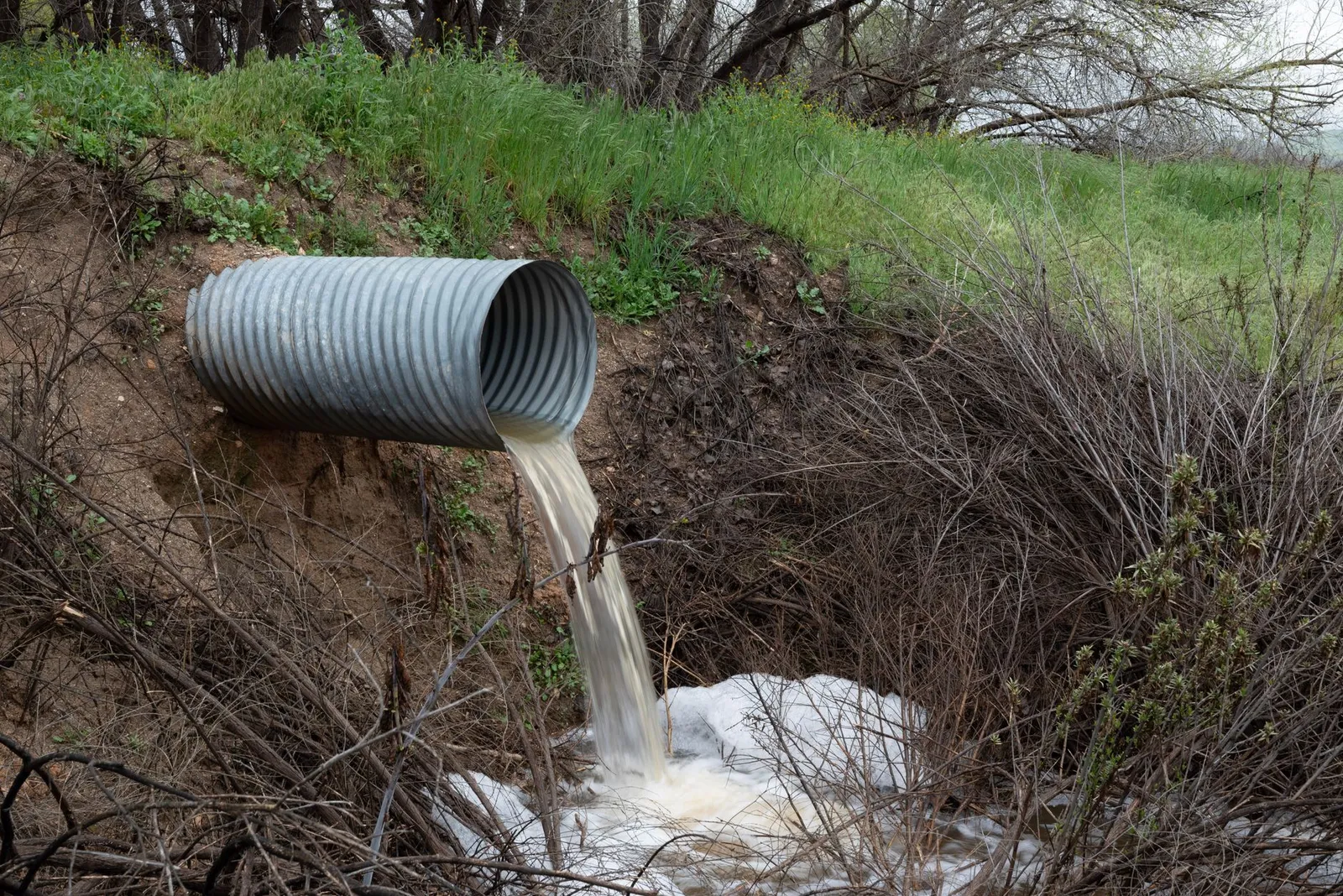
A pipe discharge points first to Section 402. A fill in a wetland or stream points first to Section 404. Neither answer replaces the threshold question: is the water within the Clean Water Act’s covered waters under the statute, controlling court decisions, and the operative regulatory regime? For the permit side in more detail, see Water and Wetlands.
What waters are covered after Sackett
Sackett v. EPA, 598 U.S. 651, decided May 25, 2023, is the current Supreme Court limit that many summaries still understate. The Court rejected the significant nexus approach as enough for wetlands jurisdiction. Covered wetlands must be, as a practical matter, indistinguishable from waters of the United States because they have a continuous surface connection with such waters.
The agencies issued a conforming rule on Sept. 8, 2023, at 88 Fed. Reg. 61964. Where that amended 2023 rule is operative, the definitions appear in 40 C.F.R. § 120.2 and 33 C.F.R. § 328.3. Where the January 2023 rule is enjoined, the agencies apply the pre-2015 regime consistent with Sackett. Proposed rules published on Nov. 20, 2025, and Sept. 9, 2026, had not replaced the final rule as of the sources checked here.
Covered after Sackett
- Traditional navigable waters, the territorial seas, and other waters covered by the operative rule or regime
- Relatively permanent, standing, or continuously flowing waters connected to covered waters, under the applicable post-Sackett structure
- Adjacent wetlands with the continuous surface connection required by Sackett
Not enough by itself
- A wetland connection based only on a significant nexus test
- A broad scientific or ecological connection, without the legal connection required by Sackett
- A site that is wet, low, mapped, or near a stream, by that fact alone
We do not treat a wet map spot as coverage. The law does not. That is the line, and it is narrower than summaries that still rely on pre-Sackett habits.
Who enforces what
| Actor | Clean Water Act role | Primary source |
|---|---|---|
| EPA | Administers the Act except where otherwise provided, issues regulations, keeps enforcement authority, and approves or oversees authorized state NPDES programs | 33 U.S.C. §§ 1251(d), 1319, 1342 |
| States | May run authorized NPDES programs, set water quality standards subject to federal review, and carry out state water pollution control duties | 33 U.S.C. §§ 1313, 1342 |
| Army Corps of Engineers | Administers most Section 404 permits for discharges of dredged or fill material | 33 U.S.C. § 1344 |
| Citizens | May bring specified citizen suits after the notice and statutory conditions in Section 505 are met | 33 U.S.C. § 1365 |
Clean Water Act enforcement is split. EPA sits at the center, but states can be the front-line NPDES permitting authority when EPA has approved their program. The Corps is central for Section 404 permits. Citizens have a statutory tool, but Section 505 is a defined cause of action with procedural limits, not an open-ended invitation to sue over every water problem.
Water quality standards and effluent limits
Permits are only one part of the Act. Section 303, 33 U.S.C. § 1313, uses water quality standards: state standards, subject to federal review, that identify uses for a water body and criteria to protect those uses. Section 301, 33 U.S.C. § 1311, prohibits unauthorized pollutant discharges and supports effluent limitations, which restrict what a source may discharge.
That structure matters because a permit is not the whole legal picture. A source must meet the conditions written into the permit and any applicable water quality standard. A Clean Water Act summary that lists only permits misses the statute’s second half: technology-based controls, water quality standards, and permit limits working together.
Common misreadings
First, the Clean Water Act is not separate from the Federal Water Pollution Control Act. It is the common name for the Act after the 1972 amendments, codified at 33 U.S.C. § 1251 et seq.
Second, the Act does not cover all water in the United States. After Sackett, coverage depends on the legal definition of waters of the United States and on the operative regulatory regime.
Third, a permit does not solve every Clean Water Act issue. It covers defined activities, discharges, limits, and conditions.
Fourth, the Clean Water Act is not the Safe Drinking Water Act. The Clean Water Act focuses on covered waters and surface water quality programs. Drinking water regulation is a separate federal statute.
Fifth, point source and nonpoint source pollution are not treated the same way. The NPDES trigger depends on a point source discharge into covered waters. For the neighboring federal review statute, see National Environmental Policy Act (NEPA): What It Requires After 2025.
Neighbor statutes and water tools
NEPA governs environmental review for federal actions. The Clean Air Act uses a different structure for air pollution control.
The closest water page is the broader Water and Wetlands page, which takes the permit and jurisdiction questions further. This page keeps the Clean Water Act in the common statute grid: what it covers, which permits it creates, who enforces it, and what changed after Sackett.
Primary sources
- 33 U.S.C. § 1342: National pollutant discharge elimination system, Office of the Law Revision Counsel, U.S. House of Representatives.
- Sackett v. Environmental Protection Agency, 598 U.S. 651 (2023), Supreme Court of the United States.
- Definition of “Waters of the United States”: Rule Status and Litigation Update, U.S. Environmental Protection Agency.
- Current Implementation of Waters of the United States, U.S. Environmental Protection Agency.
- Updated Definition of “Waters of the United States,” 91 Fed. Reg. 57284, Federal Register.
Sources accessed October 24, 2026.