
En bref
- Ocala National Forest is a Forest Service unit in north-central Florida, managed within the National Forests in Florida.
- Its defining landscape is sand pine scrub, plus springs, lakes, fire-dependent habitats, and heavy recreation use.
- The forest is about 383,000 acres, was established in 1908, and includes four wilderness areas.
- The current forest plan is the 1999 Revised Land and Resource Management Plan for the National Forests in Florida, as amended.
- For projects and species effects, the key source trail runs through Forest Service planning records, project records, and official species sources.
- Florida
- state
- about 383,000 acres
- National Forest System land
- 1908
- established
- sand pine scrub and springs
- defining landscape
This article starts with the place itself: Ocala is a Forest Service unit in the United States that many readers first meet through recreation searches. They want to explore springs, trails, campgrounds, or a scenic drive. That is useful information, but it is only part of the story.
Ocala is also a managed public land unit with a fixed set of facts: state, acreage, ranger districts, counties, wilderness areas, species records, forest plan, and current project history.
This page reflects official sources checked in October 2026. Those sources include Forest Service unit pages, planning and project records, the USDA Forest Service Land Areas Report, wilderness and wild and scenic river records, U.S. Fish and Wildlife Service species sources, and Florida Fish and Wildlife Conservation Commission materials where state wildlife context was needed. Alerts, closures, fees, permits, and reservations can change after that date, so they are left to current official systems.
Key facts
The table below uses the common grid for Southern national forest entity pages. If a value was not available from the official sources checked, it stays in the table as not known.
| Property | Value | Source |
|---|---|---|
| State | Florida | USDA Forest Service National Forests in Florida unit pages, checked October 2026 |
| National Forest System acres | about 383,000 acres | USDA Forest Service Land Areas Report, latest edition checked October 2026 |
| Established | 1908 | Presidential proclamation and USDA Forest Service history materials, checked October 2026 |
| Managing unit | National Forests in Florida, USDA Forest Service, Southern Region | USDA Forest Service National Forests in Florida unit pages, checked October 2026 |
| Ranger districts | Lake George Ranger District and Seminole Ranger District | USDA Forest Service offices and unit materials, checked October 2026 |
| Counties | Lake, Marion, and Putnam counties | USDA Forest Service maps and Florida Fish and Wildlife Conservation Commission cooperative wildlife management area materials, checked October 2026 |
| Wilderness areas | Alexander Springs Wilderness, Billies Bay Wilderness, Juniper Prairie Wilderness, and Little Lake George Wilderness | USDA Forest Service special areas records and official wilderness records, checked October 2026 |
| Wild and scenic rivers | none listed for Ocala National Forest | National Wild and Scenic Rivers System official list, checked October 2026 |
| ESA-listed species | Florida scrub-jay and eastern indigo snake are among the listed species associated with Ocala habitats in official species and planning sources; project-level lists must be checked for each action area | U.S. Fish and Wildlife Service official species records and USDA Forest Service planning records, checked October 2026 |
| Current forest plan | 1999 Revised Land and Resource Management Plan for the National Forests in Florida, as amended | USDA Forest Service planning records, checked October 2026 |
| Recent projects or litigation | not known from the official sources checked for this page as a single recent litigation item specific to Ocala National Forest; project context appears in Forest Service project records | USDA Forest Service projects pages, checked October 2026 |
One thing matters more than the rest: use the source that matches the question.
Acreage comes from the Forest Service Land Areas Report. Recreation details come from Forest Service recreation, alerts, passes, permits, and current condition systems. Species statements come from official species or planning sources, not from general wildlife lists.
Where Ocala National Forest is in Florida
Ocala National Forest is east of Ocala and north of Orlando, in the central part of the state. Official and state materials place it mainly in Lake, Marion, and Putnam counties. That is why the forest shows up in both practical map searches and broader searches about national forests in Florida.
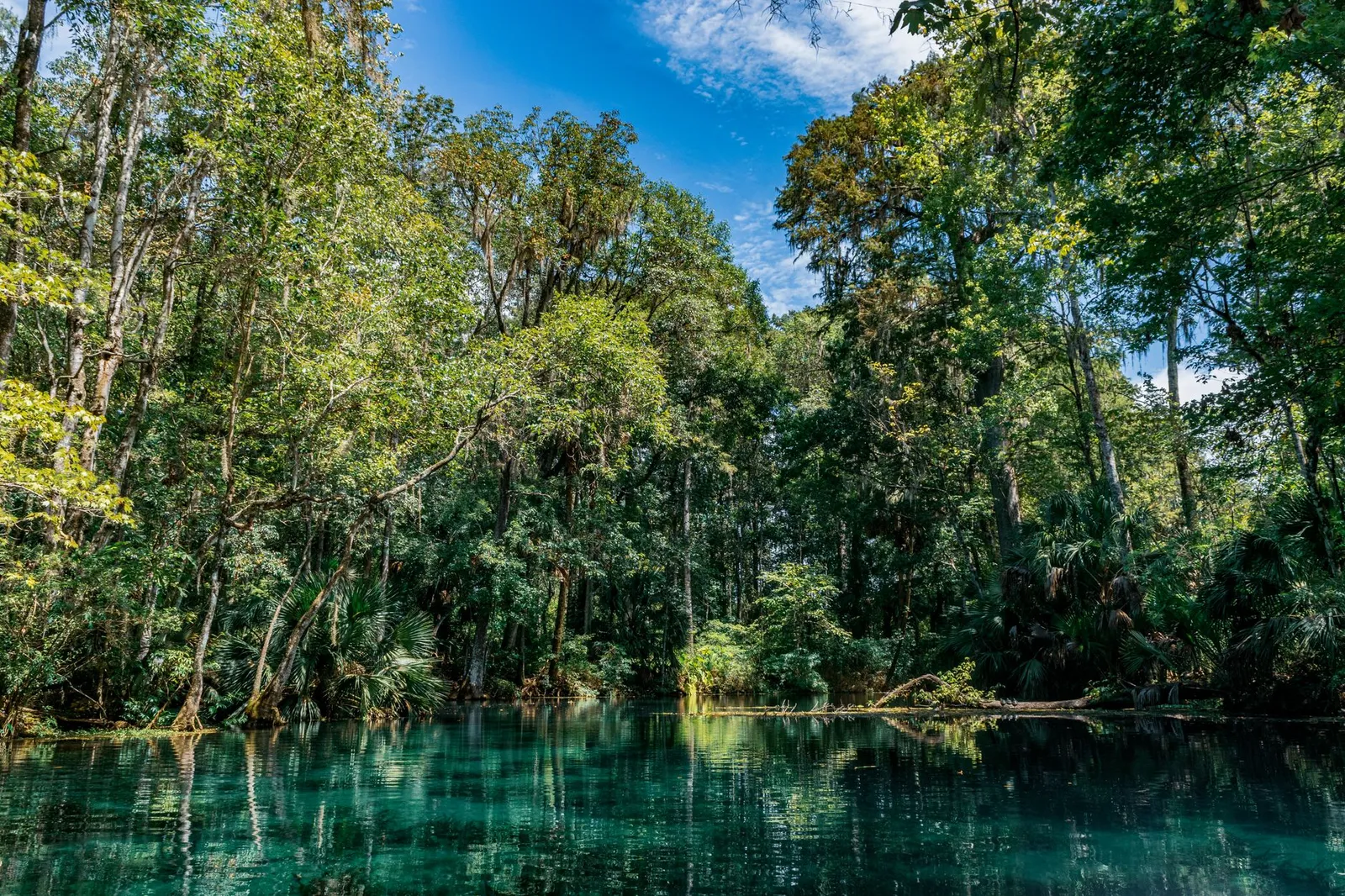
The forest is a mosaic of lakes, spring runs, scrub, pine stands, prairies, and low wet areas. Lake George is a major eastern landmark. The Ocklawaha River system and the spring-fed recreation areas also shape how many people understand the forest, even when their first question is simply where it is.
You can drive through parts of Ocala National Forest on public roads. That does not mean every road, trail, or forest route is open to every vehicle at all times. Road status, fire conditions, storm damage, temporary closures, and site access belong in current Forest Service records.
A map can tell you where the forest is. It cannot tell you whether a route is open today.
Why the scrub matters
Sand pine scrub is a specific Florida habitat, not a generic pine woods label. It means deep sandy soils, sand pine, scrub oaks, palmetto, open sandy patches, lichens, and low, dense growth. The mix changes by site, fire history, and management area.
That distinction is not academic. A scrub forest is not the same as a longleaf pine savanna. Longleaf systems are usually open, with wiregrass and frequent low-intensity fire. Ocala has some longleaf and other pine habitats, but the forest is strongly tied to the Big Scrub landscape, where sandy ridges and scrub vegetation dominate.
That affects fire planning, habitat work, road access, recreation design, and species review. Some scrub species need open sandy structure. Some recreation uses can fragment or disturb habitat if routes, parking, and trail systems are not handled carefully.
Fire, mechanical treatment, and restoration may all enter the discussion, but the right tool depends on the stand and the project record.
The species row in the table is cautious on purpose. Florida scrub-jay is closely associated with Florida scrub habitat, and eastern indigo snake is a listed species tied to several upland and wetland settings in the region. The Endangered Species Act analysis for a road, trail, burn unit, or recreation project turns on the action area and the species records used for that project, not on a broad label for the forest as a whole.
Put plainly, Ocala makes more sense when you read it as a scrub landscape first and a recreation destination second.
Springs, lakes, and water
Springs are one reason Ocala shows up so often in recreation searches. They are also part of the management story. Spring pools, spring runs, lakes, river connections, swimming areas, boating, paddling, and fishing bring public use into contact with water quality, habitat protection, site capacity, and safety rules.
Official Forest Service recreation materials identify several major spring recreation areas in or associated with Ocala National Forest:
- Juniper Springs: a developed spring recreation area associated with swimming and the Juniper Run paddling route in official recreation materials.
- Alexander Springs: a spring recreation area identified by the Forest Service for day use and water recreation, with conditions and site rules handled through official systems.
- Silver Glen Springs: a spring recreation area connected to clear freshwater use and the broader Lake George area in official recreation materials.
- Salt Springs: a spring recreation area and community landmark in the northern part of the forest, with water access and recreation information maintained through official channels.
The word spring covers more than one kind of use. A swimming area may have a fee or a capacity limit. A paddling route may be affected by water levels, storms, outfitter rules, or closures. A campground or cabin may require a reservation. A day-use site may be open when another site is closed.
That is why this page does not list entrance fees, ticket prices, or hours. Those details change. The stable facts are the named spring areas, their role in public use, and their connection to freshwater systems such as Juniper Run, Lake George, and nearby river corridors.
Wilderness and recreation on the ground
Ocala National Forest includes four designated wilderness areas: Alexander Springs Wilderness, Billies Bay Wilderness, Juniper Prairie Wilderness, and Little Lake George Wilderness. Wilderness designation protects undeveloped character and limits motorized and mechanized uses under the Wilderness Act framework and site-specific rules.
Recreation in Ocala is broader than the springs. Forest Service materials organize public use through recreation areas, trails, camping and cabins, passes, permits, alerts, and current conditions. Readers usually look for a few things first:
- Day use, including spring areas, lake access, picnic sites, and visitor facilities where open.
- Camping and cabins, including developed campgrounds, reservation sites, and other overnight options.
- Trails, including hiking routes and segments tied to the Florida Trail where official materials identify them.
- Hunting and fishing, which also involve state wildlife rules, seasons, licenses, and area-specific regulations from the Florida Fish and Wildlife Conservation Commission.
- Boating and paddling, where water access is open and allowed.
- Equestrian and off-road use, which is allowed only where official route, trail, and permit rules provide for it.
This is also where people look for a park-like experience inside a natural forest. Some places are built for day viewing, while others are managed for a recreational program that includes multiple uses and user groups.
The practical point is simple. A national forest is not a single gate and a single set of rules. It is a group of roads, districts, recreation sites, special areas, water bodies, and habitat units under one Forest Service umbrella. Conditions can differ across the same forest on the same day.
That is normal, and it is why current records matter more than generic travel summaries.
Current plan and project records
Ocala National Forest is managed as part of the National Forests in Florida under the 1999 Revised Land and Resource Management Plan for the National Forests in Florida, as amended. A forest plan is a framework document. It sets management direction, desired conditions, standards, guidelines, and area direction. It does not decide every road project, burn unit, recreation improvement, or habitat treatment by itself.
Site-specific actions appear in project records. Those records may include National Environmental Policy Act documents, scoping notices, comment opportunities, decision notices, objections, or implementation updates, depending on the project and the procedure used. For this page, those records are management context, not legal advice.
Ocala’s management issues follow from the landscape. Fire is recurring because scrub and pine systems are fire-adapted, yet they sit near roads, recreation areas, and private lands. Habitat work matters because scrub structure, listed species, and open sandy conditions do not remain fixed without disturbance or active management. Recreation projects matter because springs, campgrounds, trails, and off-road routes concentrate people in places that also have water, wildlife, and soil concerns.
The official sources checked for this page did not support naming one recent Ocala-specific litigation item as the current defining legal event. That is why the table says not known for recent litigation as a single verified item. If you are tracking one project, the right place to start is the Forest Service project record for that project, then the dated notices, environmental documents, and decisions attached to it.
How Ocala compares with nearby Southern national forests
Ocala is one of three national forests in Florida, along with Apalachicola National Forest and Osceola National Forest. The comparison helps separate what is shared under the National Forests in Florida umbrella from what is distinctive about Ocala.
| Forest | State | Acres | Defining landscape | Wilderness areas | Current forest plan |
|---|---|---|---|---|---|
| Ocala National Forest | Florida | about 383,000 | sand pine scrub, springs, lakes, and pine habitats | 4 | 1999 National Forests in Florida plan, as amended |
| Apalachicola National Forest | Florida | about 576,000 | longleaf pine, flatwoods, savannas, rivers, and wetlands | 2 | 1999 National Forests in Florida plan, as amended |
| Osceola National Forest | Florida | about 160,000 | pine flatwoods, swamps, and wetland systems | 1 | 1999 National Forests in Florida plan, as amended |
By acreage, Ocala is smaller than Apalachicola and larger than Osceola, using Land Areas Report figures rounded here to the nearest thousand acres. By character, Ocala stands apart because scrub and springs dominate the way many readers encounter it.
Apalachicola is more closely associated with longleaf pine, flatwoods, savannas, and large wetland landscapes. Osceola is smaller and more tied to flatwoods and swamp systems.
The shared plan year matters too. The three Florida national forests are managed under the same broad Forest Service plan framework, but each forest has different landscapes, recreation pressure, species issues, and project records.
Practical questions readers ask
Practical questions
Do you have to pay to enter Ocala National Forest?
Entering a national forest is not the same as using a developed fee area. Some recreation sites, passes, reservations, or permits may require payment, while other public roads or general forest areas may not. Fees can change, so this page does not list prices.
Can you drive through Ocala National Forest?
Yes, public roads cross parts of the forest, and many people experience Ocala by road. That does not mean every forest road, trail, or route is open to every vehicle. Check official road, closure, and current condition records for the date of travel.
Can you stay overnight in Ocala National Forest?
Forest Service materials identify campgrounds, cabins, and other overnight options in the National Forests in Florida system. Availability, reservations, seasons, and site rules can change. Overnight use should be checked against current Forest Service and reservation records.
Is Ocala National Forest dangerous?
A national forest is open country, not a controlled indoor site. The relevant risks are ordinary but real: heat, storms, water, fire danger, road conditions, wildlife, hunting seasons, and getting lost. Official safety and current condition pages are the right place for dated warnings.
These answers stay narrow on purpose. They separate stable forest facts from changing visitor conditions. They are informational only.
Sources and date checked
This page reflects official sources checked in October 2026. The source set used for the entity grid included USDA Forest Service National Forests in Florida unit pages, USDA Forest Service offices and recreation materials, the USDA Forest Service Land Areas Report, Forest Service planning and project pages, official forest plan documents, official wilderness records, the National Wild and Scenic Rivers System list, U.S. Fish and Wildlife Service species records, and Florida Fish and Wildlife Conservation Commission materials where state wildlife management context was needed.
The limits matter. Alerts, closures, fire danger, fees, permits, reservations, hunting seasons, road status, and site rules can change after the date checked. Stable values such as state, managing unit, counties, wilderness areas, and forest plan year are kept separate from changing recreation conditions.
More Southern national forests
Ocala belongs in the Southern national forests collection because it shows a Florida pattern that differs from Appalachian or Gulf Coastal Plain forests: scrub, springs, lakes, and high recreation demand inside a Forest Service management unit.
The closest comparison in the collection is Apalachicola National Forest, the larger Florida sister forest with a different longleaf and wetland profile.
Primary sources
- National Forests in Florida | Ocala National Forest | Forest Service, USDA Forest Service.
- FS-383: Land Areas of the National Forest System as of September 30, 2024, USDA Forest Service.
- Revised Land and Resource Management Plan for National Forests in Florida, USDA Forest Service, Southern Region.
- USDA Forest Service FSGeodata Clearinghouse: Wilderness and Wild and Scenic Rivers and Wilderness Study Areas, Florida, USDA Forest Service.
- Proclamation 823: Setting Apart the Ocala National Forest, Florida, The American Presidency Project.
- Eastern Indigo Snake (Drymarchon couperi), U.S. Fish and Wildlife Service.
Sources accessed October 24, 2026.